
70% Lost: Van Cleef's Ruby Waste Tells a Sustainability Story
When less means more

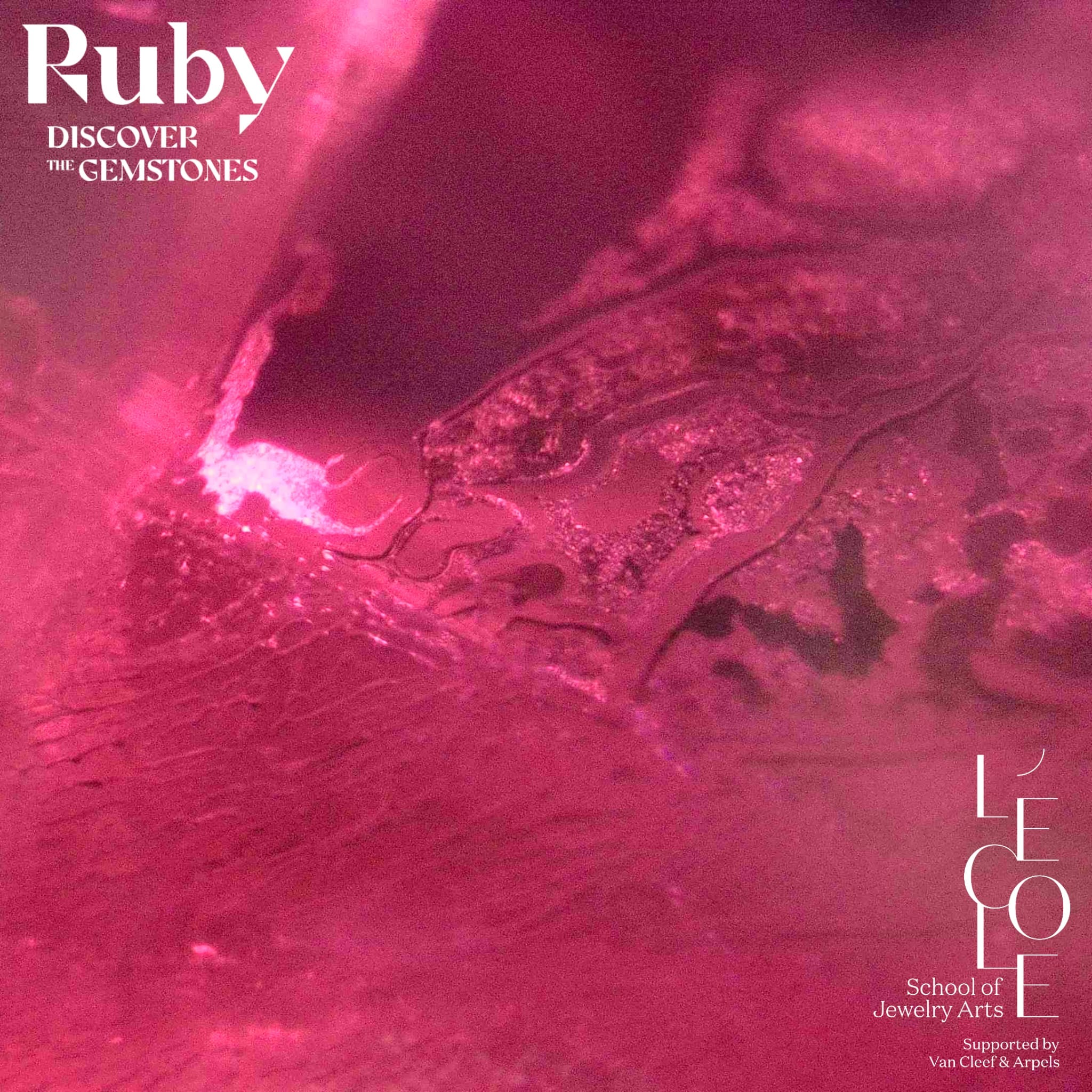
In a climate-controlled room at Singapore’s Raffles Hotel, I watched a ruby reveal its secrets. Under the microscope’s lens, what looked like flaws to the untrained eye transformed into something else entirely: a geological diary written in inclusions, a story millions of years in the making. The Van Cleef & Arpels specialist beside me smiled. “We don’t see these as imperfections,” she said. “We see them as fingerprints.”
This moment, part of their Les Jardins Secrets exhibition in October 2024, crystallised something I’d been pondering about luxury and sustainability. The conversation isn’t just about what brands avoid doing wrong, it’s about what mastery allows them to do right.
The Mathematics of Mastery
Here’s a number that stopped me: Van Cleef & Arpels loses 70% of their rubies during the cutting process. Before you gasp at the waste, consider this, the industry average is 80-90%. That 10-20% difference isn’t just statistics. It’s the physical manifestation of over a century of accumulated knowledge, translated into every careful angle of the cutter’s blade.
Their stone cutters approach each ruby like a puzzle where the pieces are worth more than most people’s annual salary. They study the crystal structure, map the inclusions, consider how light will dance through the finished stone. An oval cut here saves precious carats. A cushion cut there preserves the colour saturation. Every decision is calibrated to “save up the most possible,” as one specialist explained, because when your raw material takes millions of years to form, you don’t treat it carelessly.
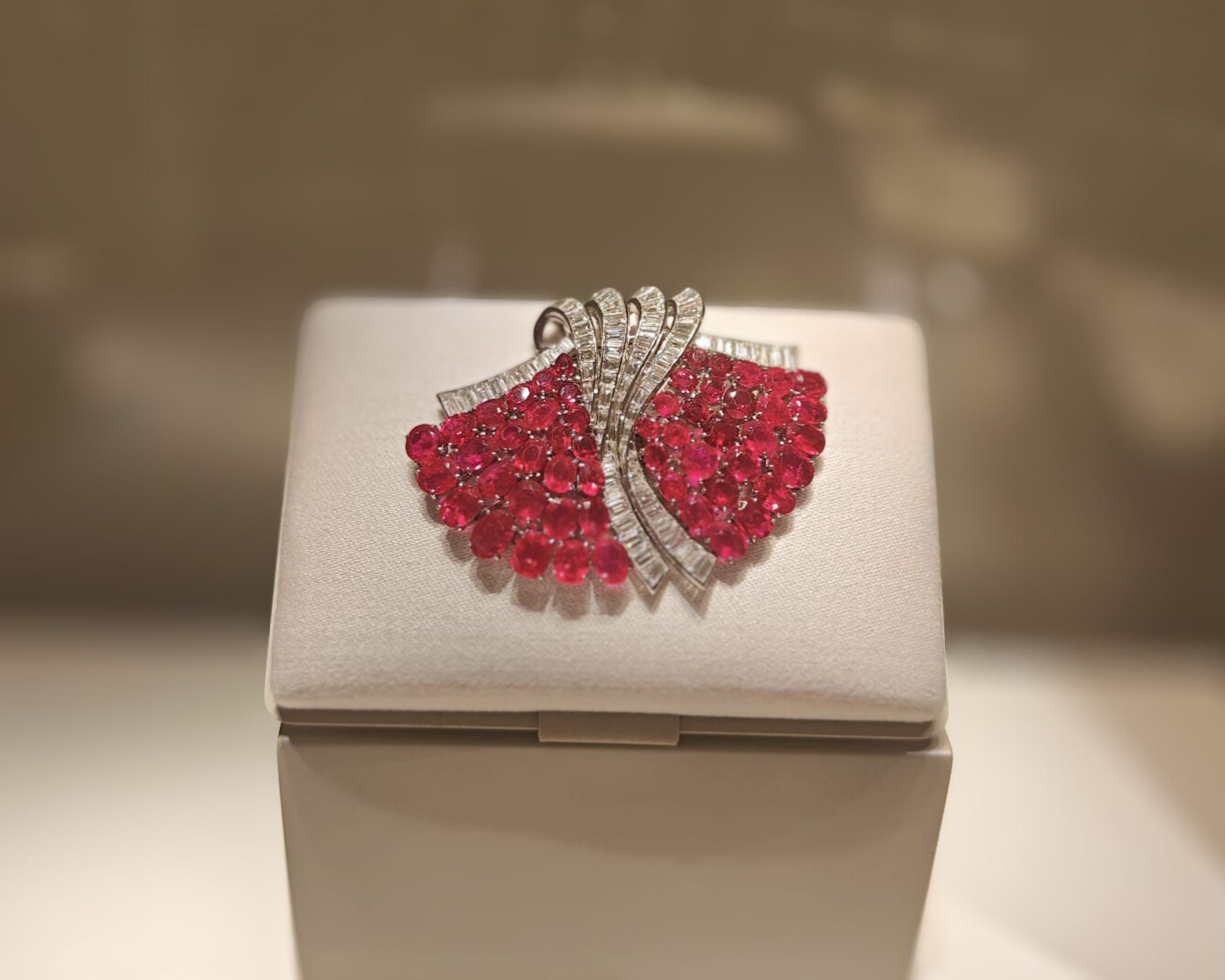
This isn’t sustainability through clever marketing. It’s sustainability embedded in savoir-faire, the kind that develops over 118 years of obsessive attention to craft. When skill reduces waste by double digits, that’s environmental stewardship disguised as excellence.
The No-Compromise Philosophy
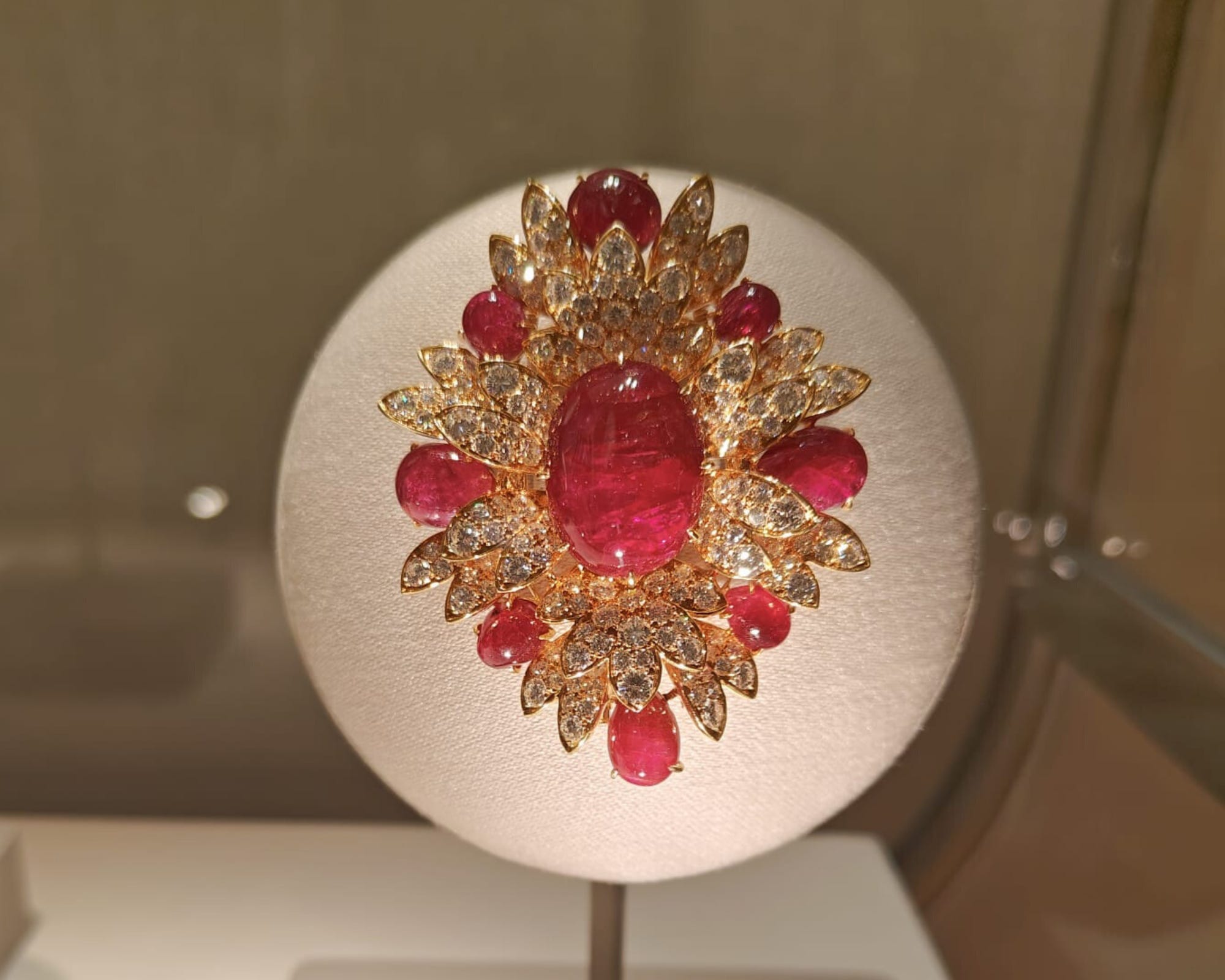
Their approach to gemstones challenges everything fast luxury has taught us. Van Cleef waits, sometimes for years, until they find stones with the exact colour, clarity, and carat weight their designs demand. No heat treatment to enhance colour. No oil treatment to mask inclusions. Just natural stones whose imperfections they’ve learned to appreciate as character.
“We value colour and quality over origin,” their gemologist told me, a statement that carries more weight than it might seem. In an industry obsessed with provenance as marketing, Van Cleef focuses on the stone itself. A ruby from Myanmar isn’t inherently superior to one from Mozambique, what matters is what nature created and what human skill can reveal.
Transformable Luxury: Less Is Truly More
One of Van Cleef’s most fascinating sustainability strategies predates the term “sustainability” by decades. Their commitment to transformable jewellery, pieces that adapt to different wearing styles, represents circular economy thinking from 1906.
The famous Zip necklace becomes a bracelet. Bird clips separate into earrings. A 1971 masterpiece featuring a 96.62-carat yellow diamond could be worn as a bird pendant, separated into winged earrings, or reconfigured as a clip. This isn’t just clever design, it’s an antidote to the “sleeping beauty in your jewel box” problem, as one Van Cleef specialist aptly described it.
When a single piece serves multiple purposes, you need fewer pieces. When jewellery transforms with your life, it doesn’t become obsolete. This is slow luxury at its finest: objects designed not for momentary trends but for lifelong relationships.
L’ÉCOLE: Knowledge as Cultural Stewardship
Perhaps Van Cleef’s most ambitious sustainability project isn’t about materials at all. L’ÉCOLE, School of Jewellery Arts, founded in 2012, operates on a premise that seems almost radical for a luxury house: making jewellery knowledge accessible to everyone, starting from age four.
With locations in Paris (housed in the spectacular 18th-century Hôtel de Mercy-Argenteau), Hong Kong, Shanghai, and Dubai, L’ÉCOLE offers courses taught by 60 professors, jewellers, historians, lapidaries, gemologists, and specialists in Japanese lacquer and grand feu enamel. It’s open to the public and represents a level of cultural investment that goes far beyond CSR optics.

Nicolas Bos, who led Van Cleef for over a decade before becoming CEO of the entire Richemont Group in June 2024, called L’ÉCOLE “probably Van Cleef & Arpels’ most ambitious institutional project.” His successor, Catherine Rénier, continues this mission, understanding that preserving craft knowledge might be the most sustainable thing a heritage brand can do.
The educational commitment extends to their staff as well. Van Cleef provides extensive training in jewellery techniques, history, and gemological knowledge, ensuring that even temporary exhibitions like Les Jardins Secrets are staffed by people who can explain not just what rubies cost, but how they form, why colour varies, and what those rutile needles visible under microscope mean for the stone’s character.
The Paris Pearl Story: Luxury’s Complex History
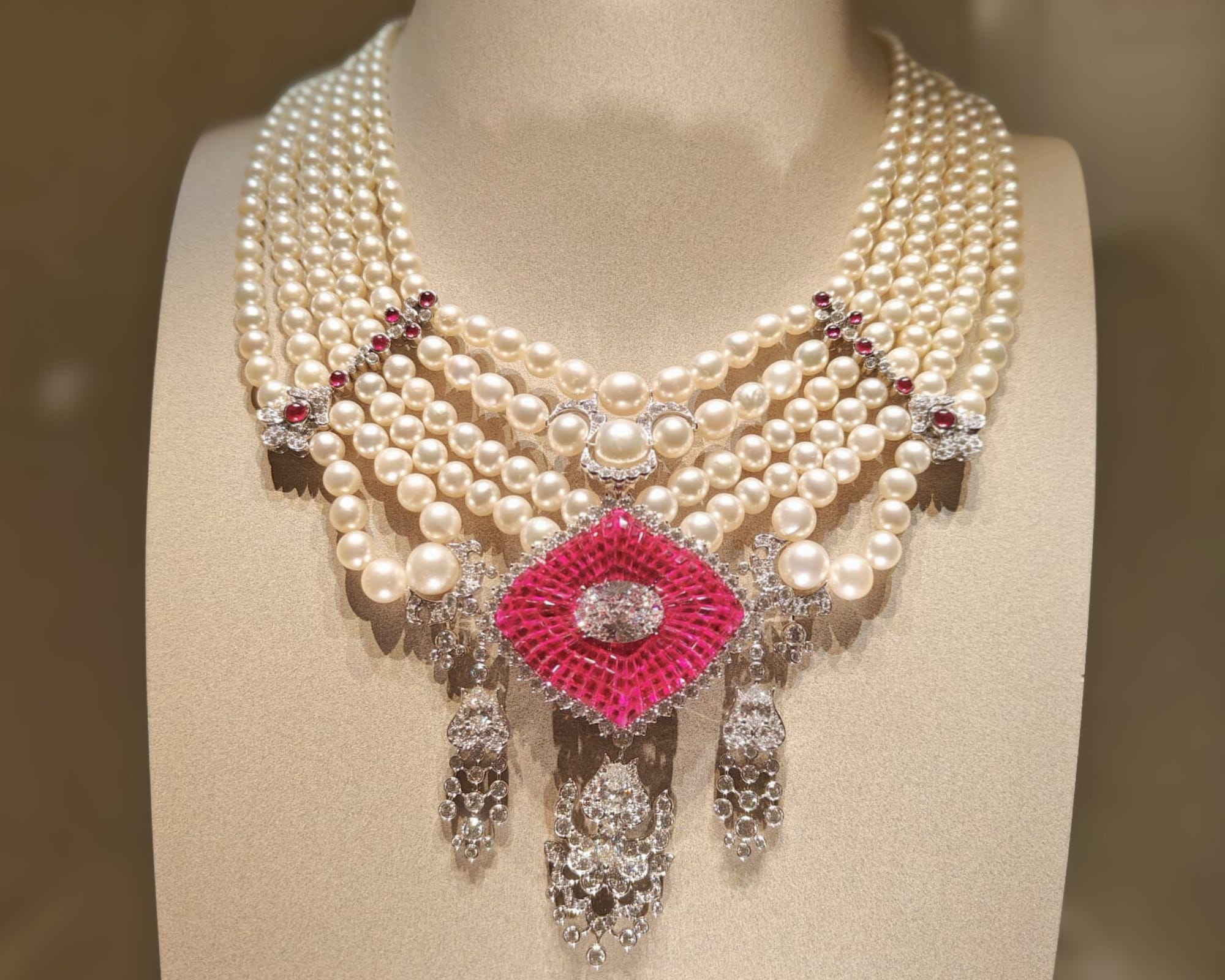
In February 2025, I visited another Van Cleef exhibition, this time at L’ÉCOLE in Paris. “Paris, City of Pearls” traces the forgotten history of pearl trade between Paris and the Persian Gulf from 1860 to 1930, a period when over 300 pearl retailers lined Rue La Fayette and Place Vendôme became the epicentre of the global pearl market.
The exhibition, curated by gemologist Olivier Segura, presents 100 pieces from prestigious collections alongside accounting books, telegrams, and photographs that document this “amazing artistic, commercial and human adventure.” But it also reveals luxury’s complicated relationship with colonial-era trade networks.
Dubai and the Persian Gulf were collection centres for natural pearls, their economies built on diving for these biominerals before oil was discovered. Parisian jewellers like Van Cleef created extraordinary pieces, but the supply chains involved complex power dynamics we’re only now beginning to examine critically.
What makes this exhibition valuable isn’t just its beauty, it’s Van Cleef’s willingness to present this history with nuance, acknowledging both the artistry and the economic relationships that made such artistry possible. That’s the kind of transparency conscious luxury requires, not just celebrating heritage, but contextualising it.
The Certification Question
Van Cleef is a certified member of the Responsible Jewellery Council (RJC), holding certification through March 2025. They adhere to the Richemont Supplier Code of Conduct, follow UN Guiding Principles on Business and Human Rights, and commit to sourcing certified diamonds and incorporating recycled materials in select pieces.
On paper, these credentials look strong. In practice, the jewellery industry faces inherent challenges in responsibly sourcing materials like gold and diamonds, materials intrinsically tied to conflict zones, human rights violations, and environmental degradation, as sustainability analysts note. RJC certification provides framework and accountability, but it’s not a perfect solution, and Van Cleef acknowledges they’re on a journey rather than claiming they’ve arrived.
Their approach to coloured gemstones, prioritising natural stones and refusing treated ones, creates its own sustainability complications. Natural, untreated rubies are increasingly rare, which means more mining to find stones that meet their standards. It’s a tension inherent in heritage luxury: the commitment to “no compromise” quality versus the environmental cost of sourcing increasingly scarce materials.
What Needs Scrutiny
But conscious consumers should also ask:
Climate action specifics- while Van Cleef commits to responsible sourcing and circular economy concepts, detailed climate targets and progress reports remain limited in public documentation.
Supply chain visibility- RJC certification covers broad principles, but granular traceability, especially for coloured gemstones from complex supply chains, remains an industry-wide challenge.
The natural stone paradox- refusing treated stones upholds quality standards but potentially increases mining impact. How does Van Cleef balance this tension?
Richemont ownership effects- as part of a €20.62 billion conglomerate, how do Van Cleef’s individual sustainability commitments integrate with or differ from group-wide policies?
The Future of Heritage Luxury
Van Cleef’s approach reveals something important about sustainable luxury: sometimes it looks less like innovation and more like not forgetting. The ruby cutters reducing waste through skill learned over decades. The transformable jewellery designed in 1933 that’s more circular economy than 2025 sustainability initiatives. The knowledge preservation happening at L’ÉCOLE.
This is luxury that moves slowly, considers carefully, and values mastery over speed. In an industry often criticised for excess, Van Cleef demonstrates that sustainable luxury might simply be luxury done right, with patience, skill, and respect for materials that took nature millions of years to create.
Standing in that exhibition room in Singapore, watching ruby inclusions shimmer under microscope light, I understood what their specialist meant about fingerprints. Every inclusion tells where that stone formed, under what pressure, alongside which minerals. Van Cleef’s gift isn’t making these “flaws” disappear. It’s teaching us to see them as beauty.
That’s the kind of perspective shift conscious luxury requires. Not perfection, but appreciation. Not elimination of impact, but minimisation through mastery. Not greenwashing, but genuine commitment to craft that, almost incidentally, happens to be more sustainable than the alternatives.
What aspects of jewellery craftsmanship surprise you most? Share your thoughts, they help shape future investigations into the intersection of heritage and sustainability.